
Dangle Academy
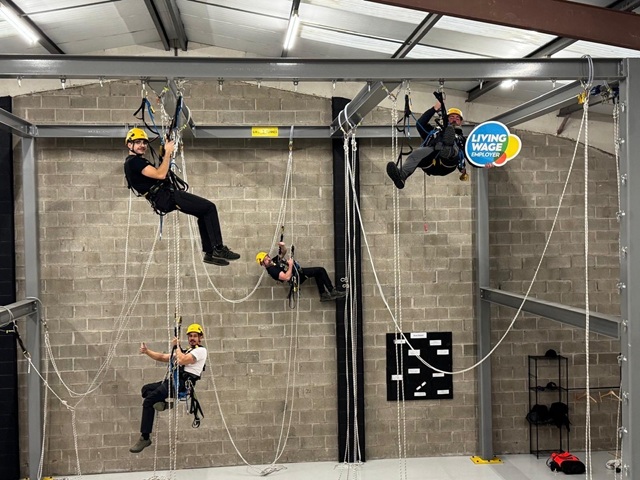
Dangle Academy is Belfast’s only IRATA-certified rope access training centre and the exclusive provider of the Train the Painter industrial coating programme in Northern Ireland.
Based in East Belfast, we deliver specialist work-at-height, industrial painting and workplace safety training, supporting individuals and employers across construction, energy, manufacturing, film and facilities sectors. Alongside training, we also operate as a professional rope access service provider, offering inspection, maintenance, cleaning and coating services. Our mission is to raise industry standards by providing accredited training and high-quality services that create opportunity, improve safety and strengthen the local workforce.
Motivation for Living Wage Accreditation
We chose to become a Living Wage Employer because fairness and opportunity are central to our organisation’s purpose. Many people entering rope access and industrial trades are seeking a stable career path, and we believe financial security is a vital part of that. Paying the real Living Wage reflects our commitment to valuing our team, setting a positive example within the industry, and ensuring our staff feel recognised, respected, and supported. Accreditation also aligns with our mission to elevate standards in training and employment across Northern Ireland.
Implementation Process
As a new organisation, we built the real Living Wage into our plans from the very beginning. Our Director had previously accredited another company in Scotland, so we already understood the requirements and benefits, which made the process extremely straightforward. Because we were committed from the offset, implementation simply involved completing the necessary paperwork, confirming our pay structure, and submitting the declarations. The full process took only a few days from start to finish, allowing us to embed the Living Wage into our organisation from day one.
Additional Workplace Changes
As a small start-up organisation, we did not need to make any major workplace changes alongside our Living Wage accreditation. Because we built the real Living Wage into our structure from the very beginning, it naturally aligned with how we already planned to operate. Our focus at this stage has been on establishing strong foundations, and ensuring fair pay was part of that from day one. While no additional changes were required, the accreditation has reinforced our commitment to creating a supportive, ethical and future-focused working environment as we continue to grow.
Challenges and Barriers
Our biggest consideration was ensuring long-term financial planning aligned with paying the real Living Wage as a young organisation still in its growth stage. To address this, we updated our pricing models, forward budgeting, and cash-flow forecasting to integrate the Living Wage as a non-negotiable baseline. As a small team, we also needed to review how accreditation would shape future recruitment costs, but transparent planning made this manageable. Overall, any challenges were outweighed by the benefits to staff morale and organisational values.
Benefits of Living Wage Accreditation
As a newly accredited organisation, the most immediate benefit has been the credibility and trust that Living Wage status brings. It reinforces our commitment to fair employment and strengthens how we present ourselves to trainees, clients and industry partners. Accreditation has also helped us establish strong foundations as we grow, ensuring fair pay is embedded from the start rather than introduced later. While it is too early to measure longer-term impacts such as retention or motivation, the Living Wage mark positions us positively and supports our aim to build an ethical, reputable and people-focused organisation.
“Accrediting as a Living Wage Employer reflects who we are. If we’re committed to raising standards in our industry, that has to start with how we treat our own people. Paying the real Living Wage is an investment in our team, our values, and the quality of our training.”
– Simon Dunn (Managing Director)